
Why Inuktut Resources?
Digital Downloads
-
Inuktitut 2026 Yearly Calender Baffin
Vendor:The Qujanaq ProjectRegular price $0.00 CADRegular price -
Inuktitut 2026 Nunavik Calender
Vendor:The Qujanaq ProjectRegular price $0.00 CADRegular price -
Inuktitut Weekly Planner- Sunday Start
Vendor:The Qujanaq ProjectRegular price $0.00 CADRegular price -
Inuktitut Weekly Planner- Monday Start
Vendor:The Qujanaq ProjectRegular price $0.00 CADRegular price -
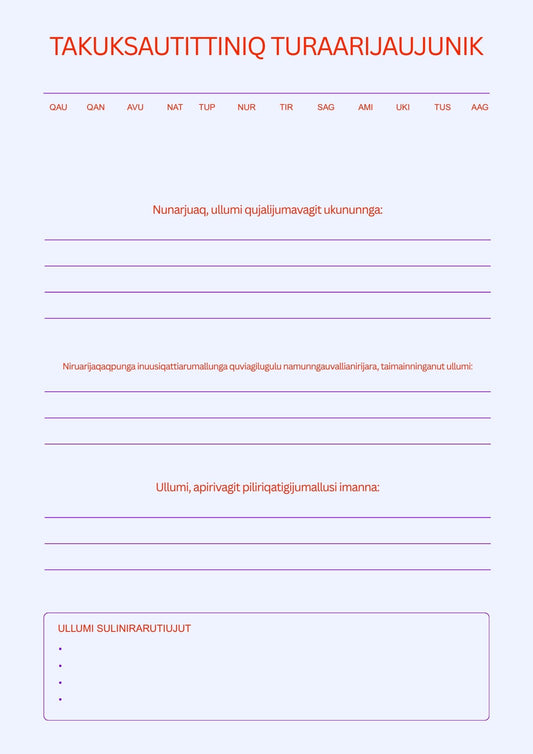
Manifestation Printable | Inuktitut, English & French Downloads
Vendor:The Qujanaq ProjectRegular price $0.00 CADRegular price -
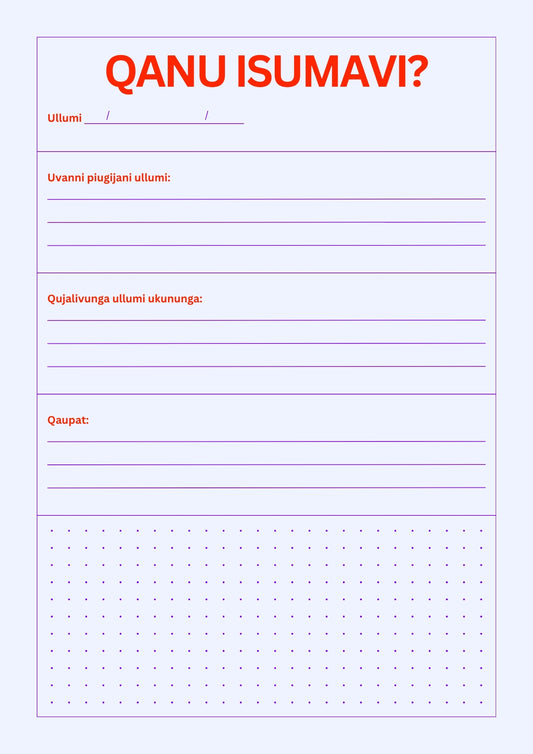
Qanu Isumavi? Daily Printable | Inuktitut, English & French
Vendor:The Qujanaq ProjectRegular price $0.00 CADRegular price -
Inuusirmut Turaarijaujuq (Life Goals) Printable | Inuktitut, English & French
Vendor:The Qujanaq ProjectRegular price $0.00 CADRegular price -
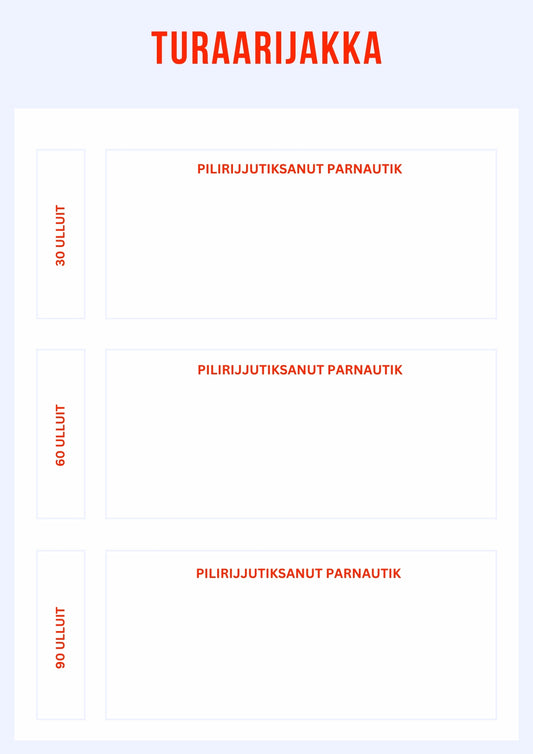
30-60-90 Day Goal Setting Printable | Inuktitut, English & French
Vendor:The Qujanaq ProjectRegular price $0.00 CADRegular price





TQP Posters Be Like...
-
Qaunurli Tavva? Printable Poster | Red Checkered & Pink Star Art
Vendor:The Qujanaq ProjectRegular price $0.00 CADRegular price -
Piu Piu Printable Typography Poster | Pink Striped Inuktitut Art Print
Vendor:The Qujanaq ProjectRegular price $0.00 CADRegular price -
Anaravii? Inuktitut Goose Poster — Instant Digital Download
Vendor:The Qujanaq ProjectRegular price $0.00 CADRegular price -
Ajungitutti Inuktitut Motivational Poster — Instant Digital Download
Vendor:The Qujanaq ProjectRegular price $0.00 CADRegular price


